
Planning Poker Online Tool
for Async Team Estimation
Most planning poker tools live separately from your work. In doBoard, estimates happen inside the task: full context, async voting before the meeting, private Fibonacci scores, and a simultaneous reveal that keeps every voice equal.
No extra tabs, no copy-pasting, no lost votes.
Use it as affordable planning poker software on its own, or as part of doBoard’s full project management workflow. You get unlimited users, projects, and tasks from $5/month.
7-Day Free Trial.
No credit card required.
Setup in 2 minutes.
Quick Answer: What is doBoard Planning Poker?
doBoard is an async planning poker online tool for teams that want estimation to stay connected to real backlog items, not separate meeting rooms, spreadsheets, or chat threads.
It is a good fit if you need:
See Planning Poker in action
2-minute video
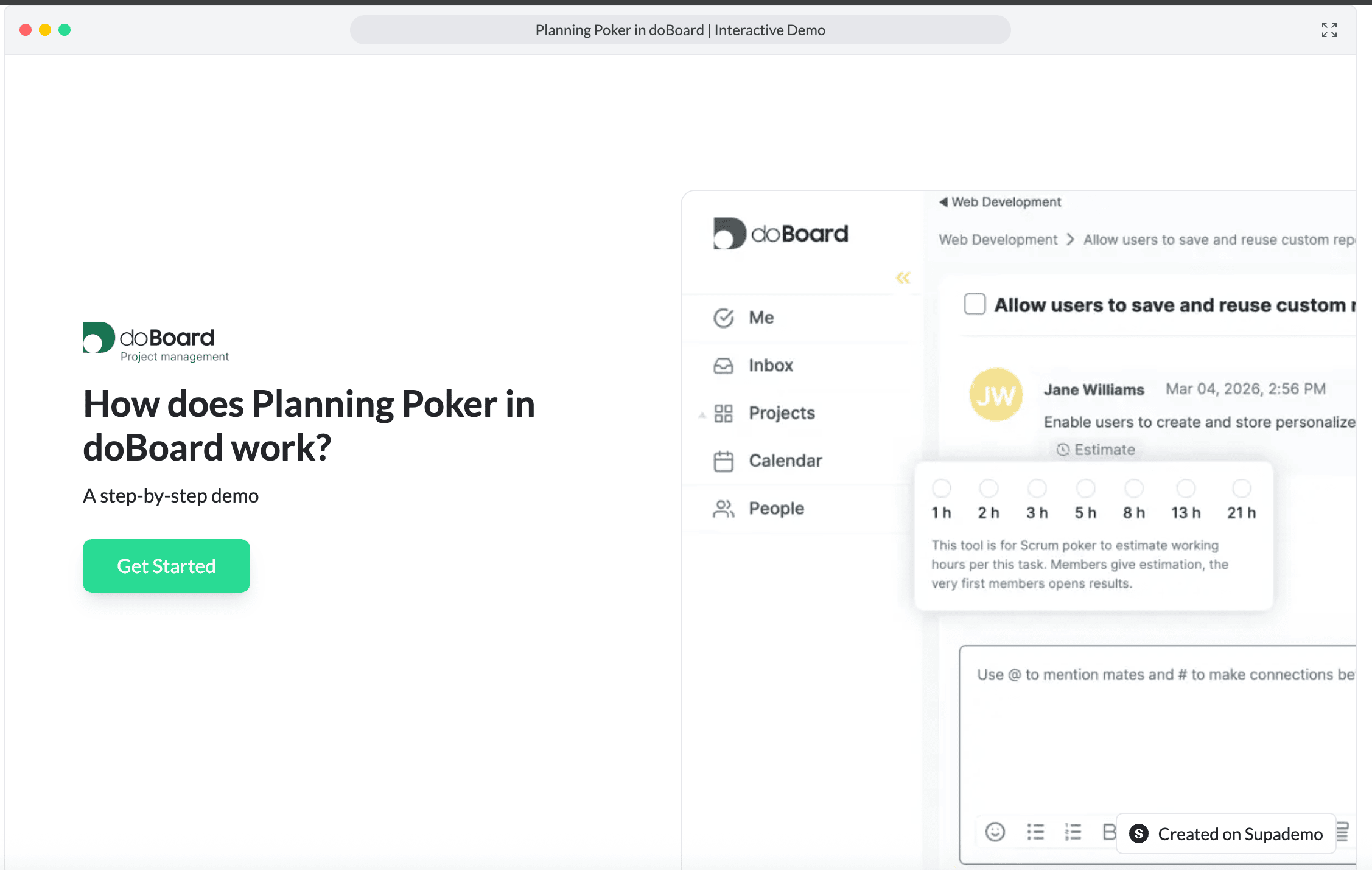
Watch a short video to see the Planning Poker workflow in doBoard from start to finish, with narration explaining what happens on screen.
doBoard vs Other Online Planning Poker Tools
Standalone planning poker tools are useful for quick voting rooms.
doBoard is a better fit when you want async planning poker online connected to real tasks, backlog context, and estimate history.
| Need | Standalone planning poker tools | doBoard |
|---|---|---|
| Quick estimation room | Good for one-off sessions | Works best when estimates need task context |
| Async team voting | Sometimes available | Built into the task workflow |
| Private votes and reveal | Usually available | Yes, with simultaneous reveal |
| Estimate history | Often separate or limited | Saved with each task |
| Backlog context | Usually missing | Always visible next to the estimate |
| Team workflow after estimation | Usually handled elsewhere | Continue with tasks, sprint planning, workload, and time tracking in doBoard |
Bottom line: Use a standalone planning poker tool for quick one-off estimation sessions. Use doBoard when you want planning poker software that keeps async votes, task context, and estimate history in one workflow.
How planning poker works in doBoard
Step 1: Create a task and add context to it
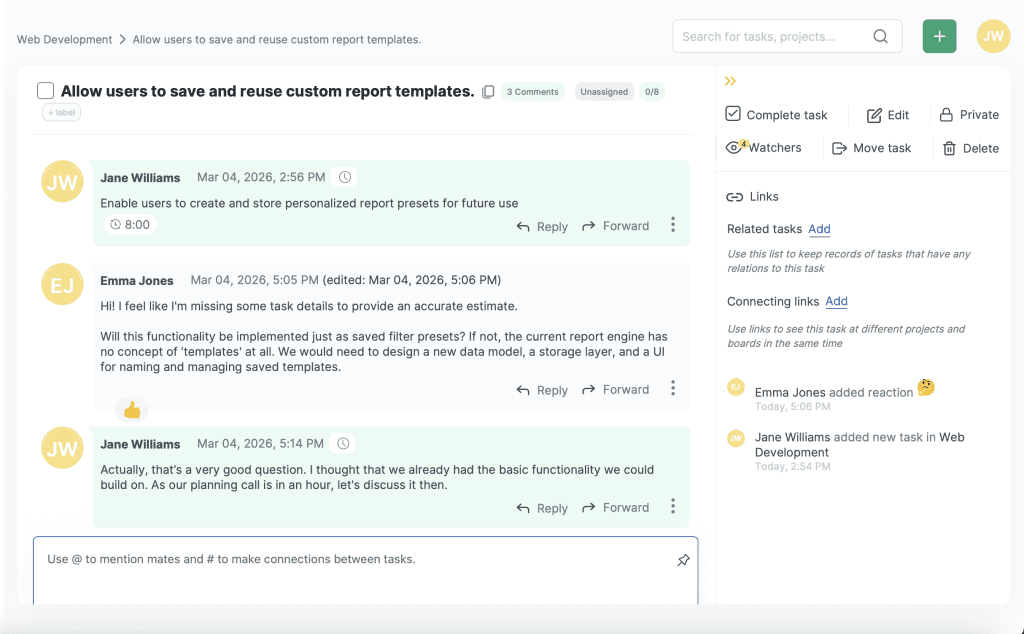
Before anyone estimates, the task needs to be clear. Add the description, acceptance criteria, comments, and open questions directly to the backlog item, so the whole team can review the context before sprint planning.
Step 2: Let the team estimate privately
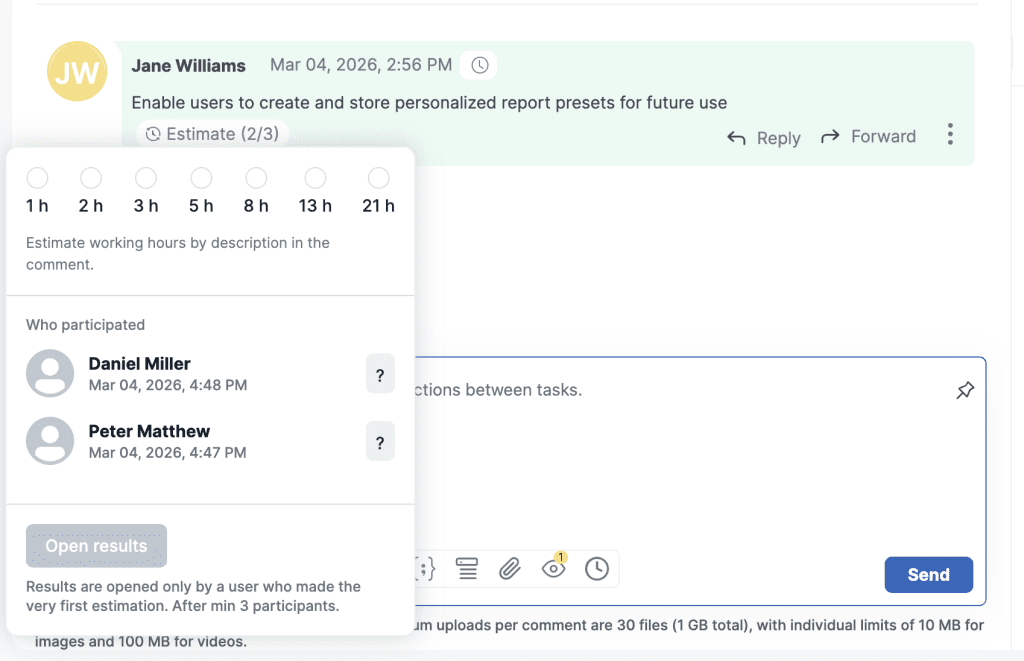
Each team member picks a value privately using the built-in Fibonacci scale. Votes stay hidden until reveal, so every estimate is independent and no one anchors to the loudest voice in the room.
Step 3: Reveal, discuss, and decide
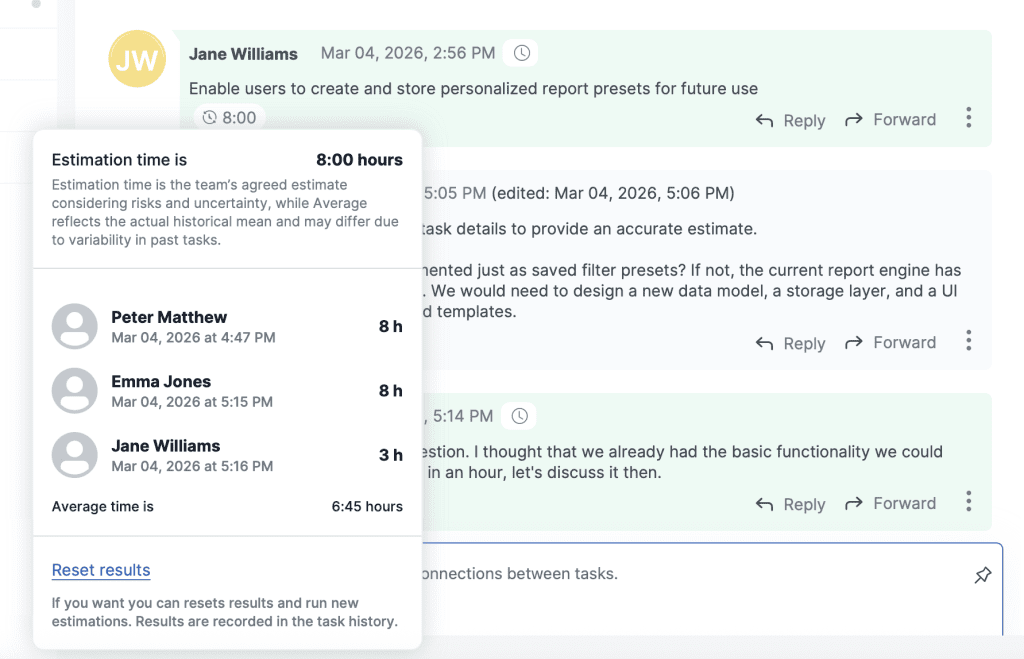
Reveal all votes at the same time. If estimates are close, the team can record the final number and move on. If the spread is wide, the team discusses the assumptions behind the high and low estimates before deciding.
The final estimate and vote history stay saved with the task, so nothing gets lost after the session.
Key Planning Poker Features in doBoard
Why Online Planning Poker Sessions Go Wrong
Someone speaks first. Everyone else adjusts. The number gets recorded, but the assumptions never surface. Planning Poker was built to fix exactly this.
Bottom line: doBoard makes online planning poker more reliable by keeping votes private, revealing estimates at the same time, and saving the final estimate and vote history directly on the task.
Planning Poker is One Feature.
doBoard Is the Full Picture.
doBoard is a simple, powerful and budget-friendly project management tool that doesn’t charge you for growing. You can use it just for planning poker and scrum poker online, or take advantage of the full feature set:
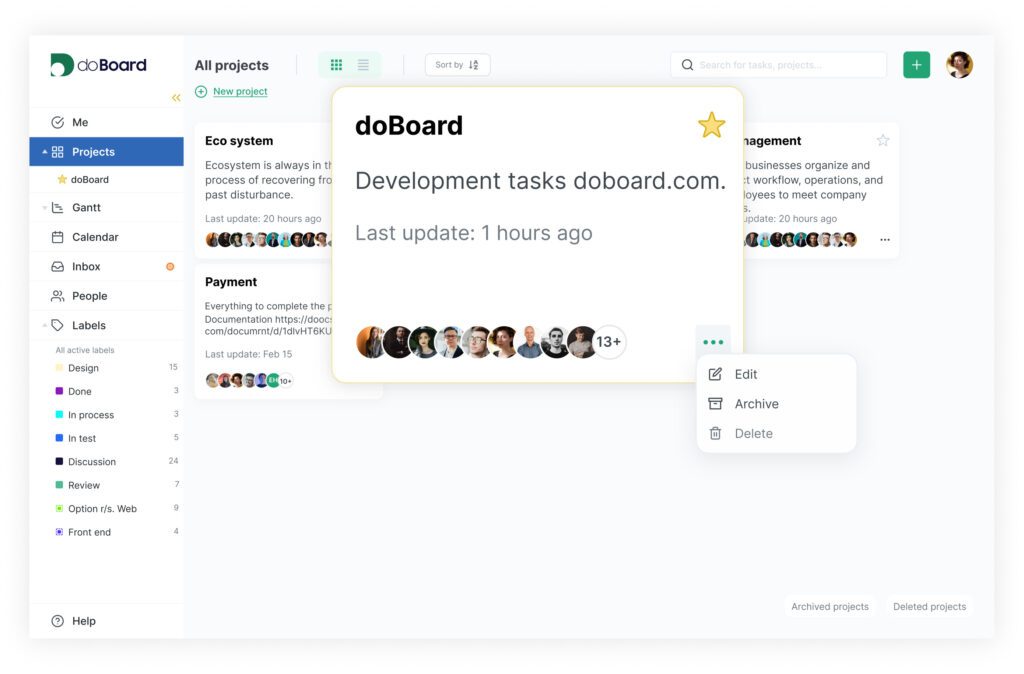
No per-seat fees. No feature paywalls. The whole team for $5/month.
What Is Planning Poker?
Planning Poker is a group estimation technique: each team member picks a number privately, then everyone reveals at the same moment.
No one anchors to someone else’s guess.
Wide spread means hidden assumptions. Tight spread means the team is aligned.
It takes minutes to run and works for any team that estimates work, not just developers.
Not sure if Planning Poker fits your team?
We wrote a practical guide with step-by-step instructions and real examples from product, marketing, and healthcare teams.
Read the full guide →
Run async planning poker with your whole team
Estimate tasks before sprint planning, reveal votes together, and keep every decision tied to the task.
No credit card required.
Unlimited users, projects, and tasks from $5/month.
Planning Poker Online FAQ
Most online planning poker tools work as separate voting rooms. In doBoard, planning poker happens inside the task, so the team can estimate with full context and keep the final estimate and vote history attached to the backlog item.
This makes doBoard a better fit when you need async voting, private Fibonacci estimates, simultaneous reveal, task context, and estimate history in one workflow.
Yes. doBoard lets the whole team estimate asynchronously before sprint planning. Each person votes privately, and results stay hidden until the simultaneous reveal. If you are comparing async poker tools, doBoard is a better fit when you want private voting, simultaneous reveal, task context, and estimate history in one workflow.
Yes. You can run planning poker online in doBoard without a separate voting room, spreadsheet, or shared document. Estimates stay connected to the task, together with the description, comments, and vote history.
doBoard offers a free 7-day trial with full access to planning poker and all other features. After the trial, pricing starts at $5/month for the whole team, with unlimited users, projects, and tasks.
Yes. Planning poker is included in doBoard at no extra charge. For $5/month, your team gets async planning poker, unlimited users, unlimited projects, unlimited tasks, and the rest of doBoard’s project management features. Pricing only grows if you need more storage.
Yes, if your team needs more than a quick voting room. doBoard is a strong planning poker software choice for 2026 when you want async voting, private Fibonacci estimates, simultaneous reveal, backlog context, and estimate history saved with each task.
If you only need a one-off free room, a standalone planning poker tool may be enough. If you want estimation connected to real project work, doBoard is the better fit.
Yes. doBoard works well for remote and distributed teams because team members can review the task and vote asynchronously before the planning session. The team can then reveal, discuss, and decide together.
Yes. doBoard includes the Fibonacci scale: 1, 2, 3, 5, 8, 13, 21. Your team can use these values as story points, hours, or any estimation unit that fits your workflow.
No. Planning poker is common in Scrum, but any team can use it to estimate work. Product, marketing, operations, and software teams can use doBoard planning poker when they need a structured way to compare effort and complexity.
Planning poker is a group estimation technique where each team member chooses an estimate privately, then everyone reveals their vote at the same time. This helps teams avoid anchoring, compare assumptions, and agree on a more reliable estimate.